Valentine's Day and Betrayal: How It Feels, How to Cope, and How Therapy Helps You Heal
For a partner betrayed on Valentine's Day in California, seeing a wall of red hearts while shopping at Target can trigger tightness in their chest.
This is because the holiday brings back painful memories, turning an enjoyable holiday into one of loneliness and pain.
Fortunately, you can regain control of your nervous response during this Valentine period. This article explores what betrayal feels like, how to cope with it, and how therapy can help you heal.
Don’t face February 14th alone. Book a free, confidential consultation with Dr. Invia at San Jose Counseling.
Why Valentine's Day Reopens the Wound of Betrayal
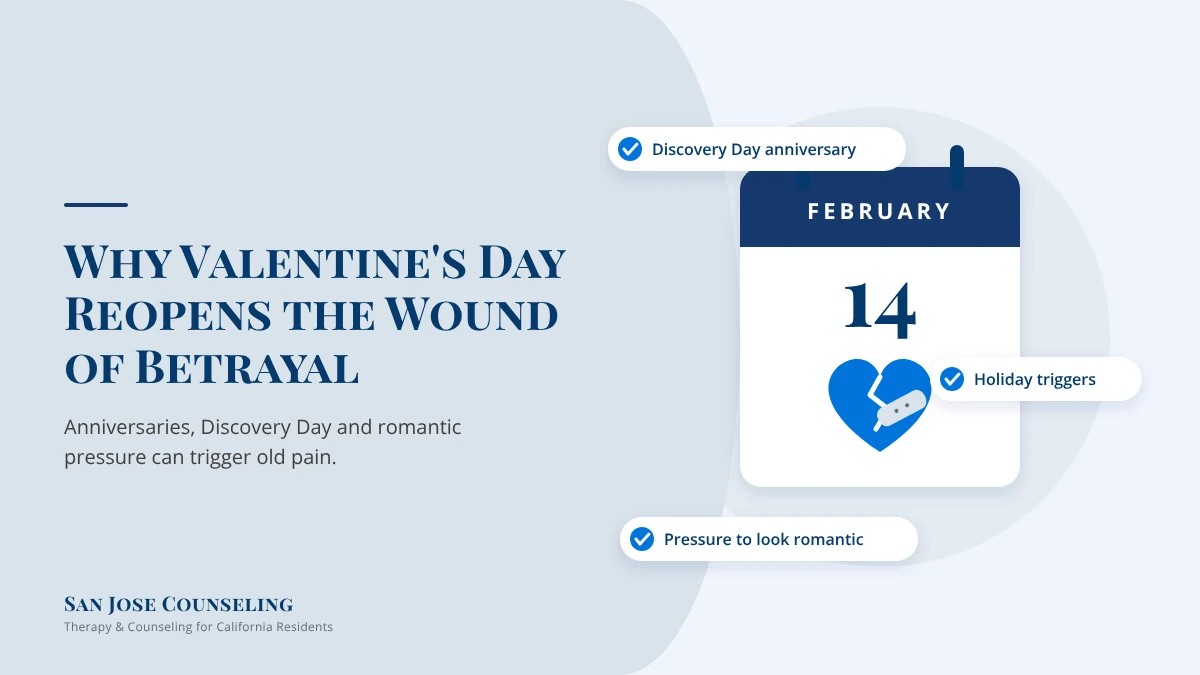
For people experiencing both Valentine’s Day and betrayal, February 14th will likely feel more stressful than celebratory because it carries two vastly opposing emotional effects.
On one hand, betrayal disrupts your ability to express yourself safely; on the other, Valentine’s Day is full of romance, commitment, and stability.
When these opposite forces collide, they can create a painful gap between what you thought your relationship was and what it has become.
Discovery Day reminders of what happened, along with the pressure to put on a good show of romance, will amplify your reaction.
In places like Silicon Valley, where there seems to be no limit to how much money couples spend on photos and other romantic gestures, this sense of isolation can feel even greater.
The betrayed person might think, “Am I enough?” or simply, “I am not enough,” while the person who cheated feels pressured to do everything perfectly.
The "Discovery Day" Anniversary Effect
Trauma memories can be linked to dates, seasons, holidays, songs, or other cues. So for someone who experienced Valentine's Day betrayal, these triggers may reignite negative feelings even years later, affecting your ability to recover from the emotional affair.
However, this does not mean recovery has failed or that they should simply “get over” the painful memory.
Valentine’s Day may also coincide with birthdays, anniversaries, or Discovery Day itself, creating multiple triggers in a short period.
In reality, the goal of exposure therapy is not to eliminate all triggers; rather, to reduce the emotional impact of those triggers so as to create more separation between the present moment and past experiences.
When the Holiday Becomes a Trigger, Not a Celebration
A trigger is a present-day reminder of a past event that causes a traumatic response before you have time to think it through.
For example, seeing a flower delivery person, receiving a call from a restaurant to confirm reservations, seeing an ad for jewelry, or being shown photos of a couple may fill you with fear, anger, numbness, or anxiety. Learn more about 7 signs of high functioning anxiety.
In some ways, pain shopping, like re-reading texts, comparing yourself to the person who had the affair, etc., can exacerbate this, as oftentimes people believe that reviewing messages will provide them with the closure they are seeking.
However, recognizing a trigger matters because it shows you what needs attention.
How Betrayal Actually Feels Like: The Emotional and Physical Toll
Betrayal can have emotional effects as well as physical effects on the body and your identity. What's particularly disorienting about betrayal is that the harm came from someone you relied on to keep you safe.
Experiencing a rollercoaster of desperation for answers followed by numbness doesn't mean you're "losing it". You may find yourself grieving the loss of the relationship and parts of your identity, such as your perception of reality, your judgment, or even your self-worth.
The Emotional Symptoms
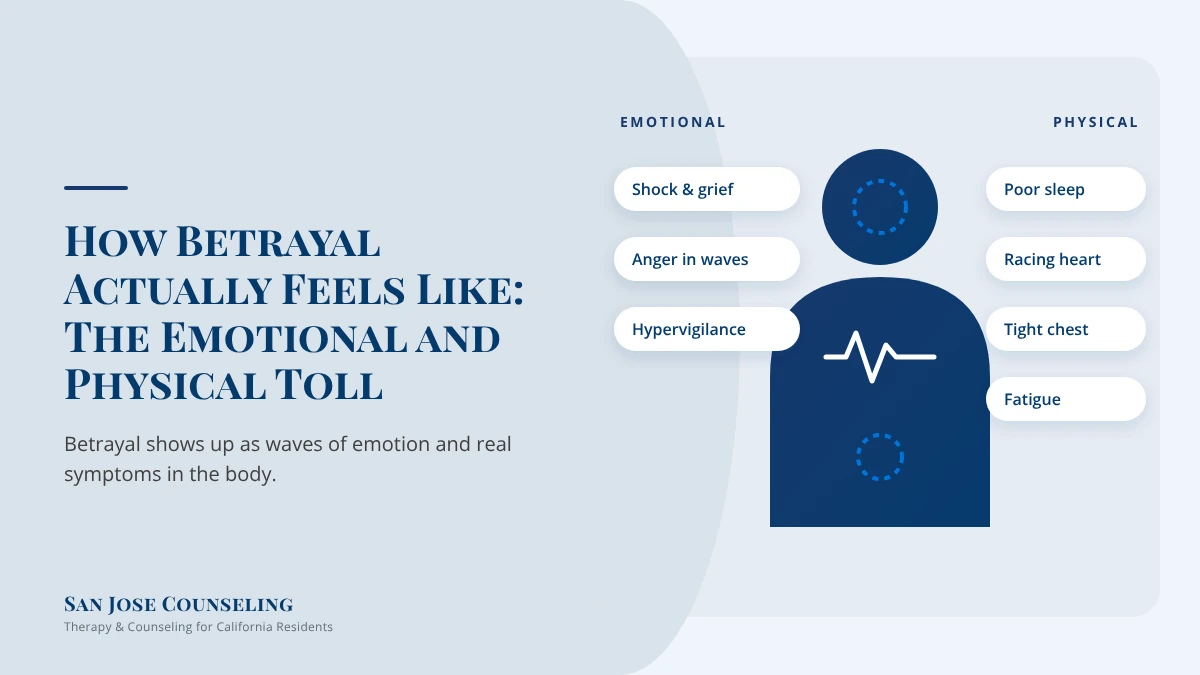
Shock, denial, grief, anger, shame, and anxiety from betrayal can come in waves, unlike other experiences where there might be a clear progression of these feelings.
Repeatedly recalling memories of the event or wondering about the 10 questions to ask your cheating partner can contribute to intrusive thoughts, which consume mental energy and disrupt sleep patterns.
A hyper-vigilant response may cause you to constantly check your phone, request reassurance, or analyze previously trustworthy statements. While these behaviors may appear as if they stem from a lack of trustworthiness within yourself, they generally reflect an attempt to regain a sense of security.
The Body Keeps Score: Physical & Nervous-System Symptoms
Because betrayal involves attachment violations that activate the nervous system, betrayal trauma symptoms may manifest physically.
These can include disrupted sleep patterns, changes in eating habits, a rapid heartbeat, chest tightness, gastrointestinal problems, extreme fatigue, and difficulty concentrating.
Beyond these physiological responses, the body may shift between three states: fight, flight, or freeze. These reactions aren’t something you consciously choose to do but represent the body’s automatic response based on perceived danger.
Is Betrayal Trauma a Real Diagnosis? (Betrayal Trauma, PISD & PTSD)
There are no official DSM-5-TR diagnoses for betrayal trauma, and there are no formal DSM diagnoses for post-infidelity stress disorder (PISD), which was coined by Dennis Ortman in 2005.
Although infidelity-related distress may mimic post-traumatic stress disorder (PTSD), depression or anxiety, an individual's infidelity usually will not meet PTSD Criterion A. Clinically relevant symptoms of PTSD, depression, or anxiety have been shown to occur in approximately 30-60% of betrayed people. Learn more about depression counseling.
How to Cope With Betrayal on Valentine's Day
Permission is key to coping with Valentine’s Day Betrayal. It is perfectly okay not to celebrate February 14th romantically.
You can opt out, change how you see the day, keep your plans simple, or spend time on self-care. Pre-planning can help you avoid surprising an already sensitive nervous system with unwanted memories.
How much planning you need often depends on your stage of recovery. The betrayed partner may need protection and separation, while the partner who cheated may need accountability rather than elaborate expressions.
Grounding and support can help both partners. Couples and Marriage Counseling San Jose can provide a safe environment for couples to have uncomfortable discussions when unresolved trauma surfaces due to the holidays.
1. If You're the Betrayed Partner
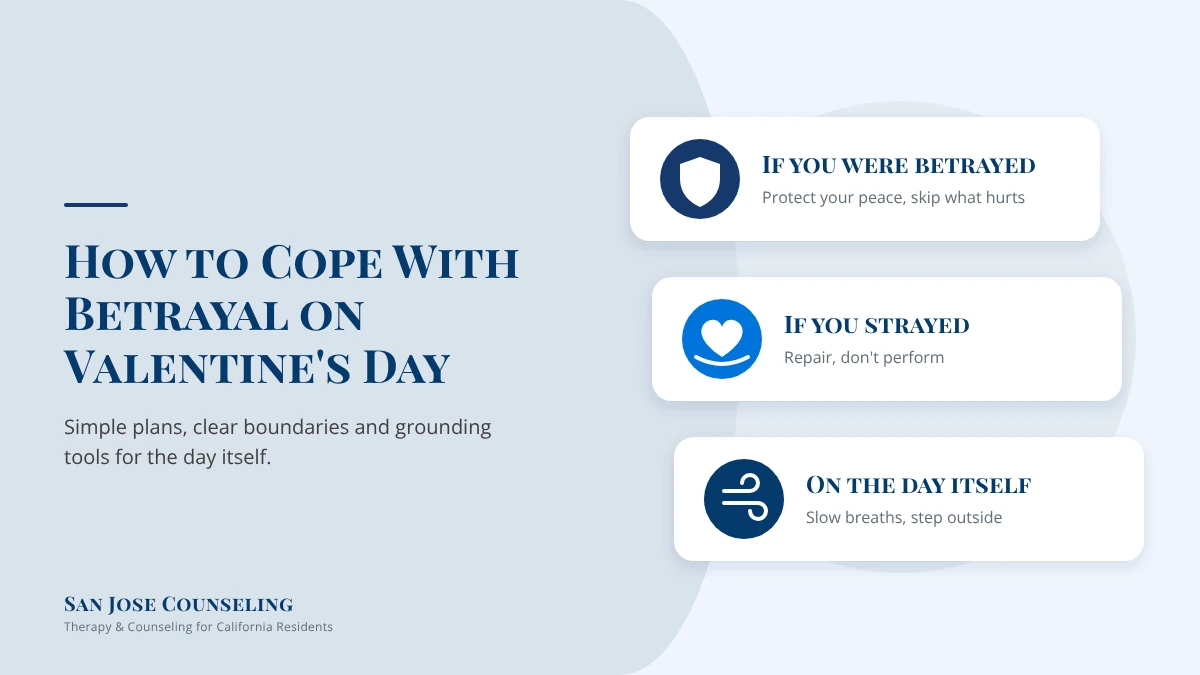
Protecting your peace is better than performing wellness. Reduce your expectations of yourself and others. Also reduce the number of people and places you encounter who are tied to the affair. Create an experience for yourself, one that is unique to you.
Being your own valentine may be about your next meal, a meaningful purchase, sleeping in, spending time with supportive people, etc. If you find yourself wanting to engage in pain shopping, stop first, and then question what this will really accomplish. Redirect to something that helps you feel grounded.
2. If You're the Partner Who Strayed: Repair, Don't Perform
Flowers, reservations, and expensive gifts can’t speed healing. Ask your partner for specific things they want (including if they don’t want anything) and take their answer seriously; don’t justify yourself. What matters most is connection (not expectations), and therefore, it’s being patient with your partner and consistently present that matters more than large gestures.
An example of how to do this would be “Today may be hard. I won't rush you. I'll keep showing up."
This tells your partner you’re accountable without requiring them to reassure you. Don't make Valentine's Day about testing their trust. To rebuild, consistent & transparent behavior in relationships is required over time.
3. Grounding and Nervous-System Tools for the Day Itself
Take time to breathe slowly and steadily, and focus on one thing at a time. Place your hand on your heart while you do it, take a warm bath, walk slowly, or step outside for some fresh air. Grounding techniques can help shift your focus to the present.
Label what you are experiencing as simply: "This is a trigger, not a present-day danger." Recognizing that the feelings will pass with time can reduce their power.
How Betrayal Trauma Therapy Helps You Heal
Betrayal trauma therapy in California focuses on individual symptom reduction and relational attachment injuries. Trauma-based care can promote healing from the pain and traumatic memory associated with betrayal. The model offers individual, couples, or combined therapy options based on client needs and goals.
Regardless of the decision about staying in the current relationship, therapy can help build self-trust and personal clarity. In situations where the goal is to pursue reconciliation and work through the relationship issues surrounding infidelity, trauma-informed therapy can also be used to facilitate effective communication, accountability, and increased levels of mutual trust.
A partner betrayal trauma therapist in San Jose will use this evidence-supported therapeutic model specifically with clients who are dealing with the emotional effects resulting from being betrayed by their intimate partner.
EMDR: Reprocessing the Moment of Discovery
EMDR (Eye Movement Desensitization & Reprocessing) is an evidence-based, protocol-driven form of psychotherapy that combines bilateral stimulation while a client briefly attends to a traumatic memory.
The goal is to reduce the intensity and vividness associated with the traumatic memory, not to delete it.
When treating clients who have experienced betrayal, possible "targets" could include moments of discovery, deceit, gaslighting, or negative beliefs about oneself, e.g., "I am unlovable" or "I cannot trust my own judgment".
The World Health Organization has included EMDR as one type of psychological intervention for adults with posttraumatic stress disorder (PTSD).
As with all treatments, using EMDR to treat betrayal-related distress should be determined on an individual basis and by a licensed mental health professional, like Dr. Invia or San Jose Counseling.
Emotionally Focused Therapy & the Gottman Method: Repairing the Bond
Emotionally Focused Therapy (EFT) and the Gottman Institute have developed couple and marriage counseling approaches that both address individual distress within a context of relationship injury.
EFT is based on attachment theory, which helps couples identify painful patterns, express the underlying needs driving these negative interaction patterns, and build greater emotional security through more emotionally responsive interactions.
There are empirical studies that support EFT as a well-supported, empirically based approach with regard to its efficacy in treating couples experiencing relationship distress and/or attachment injuries.
In addition to working at the individual level to improve communication, develop friendships, enhance trust, and provide a framework for repairing relationships after conflict, the Gottman Method offers additional resources such as the "5-5-5" method.
This includes speaking for five minutes, listening for five minutes, and then working together for five minutes.
What a Certified Partner Trauma Therapist (CPTT) Does Differently
A Certified Partner Trauma Therapist (CPTT), like Dr. Invia, specializes in working with individuals experiencing partner betrayal trauma. This may include sexual or pornography addictions.
According to IITAP, to earn full CPTT certification, an individual must complete the IITAP Program, be supervised by an approved supervisor, and have at least 5 years of postgraduate clinical experience.
Rather than viewing the traumatized partner's responses as simply "relationship issues", the model views those same responses through the lens of the traumatized individual, enabling the therapist to work on both the trauma symptoms of the individual and to develop strategies for repairing the relationship.
How San Jose Counseling Helps You Repair Your Relationship
San Jose Counseling provides trauma-informed relationship support for affairs and divorce recovery on Valentine’s Day and other betrayals in the Bay Area. We have over thirty years of experience using approaches such as EMDR, EFT, and Gottman.
We provide individual healing, couples therapy, and discernment counseling when you are unsure whether to stay with or separate from your partner.
Also, Dr. Invia is certified by IITAP (International Institute for Trauma and Loss Professionals) as a CSAT (Certified Sex Addiction Therapist) and CPTT (Certified Partner Trauma Treatment).
While California has a “no-fault” divorce system, it is essential to gain personal clarity before separation. San Jose Counseling serves clients in San Jose and nearby areas, plus residents throughout California via remote teletherapy.
Schedule a free consultation with Dr. Invia to understand the best approach for your situation.
Dr. Invia A. Betjoseph
A licensed therapist and certified expert in sex addiction and partner trauma, offering compassionate counseling for individuals and couples. With advanced training in trauma therapy, including EMDR and Emotionally Focused Therapy (EFT), the focus is on providing effective, evidence-based treatment to heal emotional wounds, restore trust, and support lasting recovery.
FAQs
Q1. Why is Valentine's Day so hard after being cheated on?
Valentine’s Day may increase your feelings of betrayal pain, as media (romantic messages), couples, and expectations surrounding this day often highlight how far apart you are from the relationship you thought you had and what actually happened.
Q2. Is it normal to still feel triggered by betrayal years later?
Yes. It is normal for anniversary reactions and triggers to cause distress again years after an event. Being triggered doesn’t always mean you’ve regressed in treatment.
Q3. How do I get through Valentine's Day after my partner's affair?
Plan ahead, lower expectations, know your triggers, choose safe activities, limit pain shopping, and get support from people you can count on or a therapist.
Q4. Should I give my cheating partner a Valentine's Day gift?
No, you don't. Ultimately, whether you should get a gift depends on your emotional comfort level and the reasonable boundaries in your relationship right now.
Q5. Is betrayal trauma a real condition?
Yes, it exists. It's an acknowledged clinical phenomenon, although it has not been established as a distinct diagnostic category (DSM-5-TR).
Q6. Can betrayal trauma cause physical symptoms?
Yes. For many individuals who suffer from serious betrayal-based psychological distress, they may also develop the following physical issues: insomnia, weight loss/gain, tiredness, inability to concentrate, rapid heartbeat, chest pressure/shortness of breath, and gastrointestinal complaints.