I’ve Never Been Happy with My Spouse Since We Got Married
The research published in the National Library of Medicine suggests that up to a third of married individuals report low marital satisfaction. Just as a table needs four legs to stand, the marriage also needs trust, communication, mutual support, and happiness to thrive.
The unhappiness in marriage could be worse when it feels like you haven't been happy with your spouse since you got married. Relationship experts and researchers describe numerous factors that contribute to unhappiness in marriage including lack of intimacy, financial stressor, betrayal trauma, among others. But marital distress and unhappiness can affect children's well-being, your mental health and, overtime, may turn into long-lasting resentment.
But timely and professional couples therapy can help resolve those core issues and restore that much-deserved peace. If you’re in California, schedule a free consultation call with LMFT and CPTT (therapist) Dr. Invia A. Betjoseph to discuss your options of rekindling love and happiness in marriage.
What Causes Spouses to be Unhappy in Marriage?
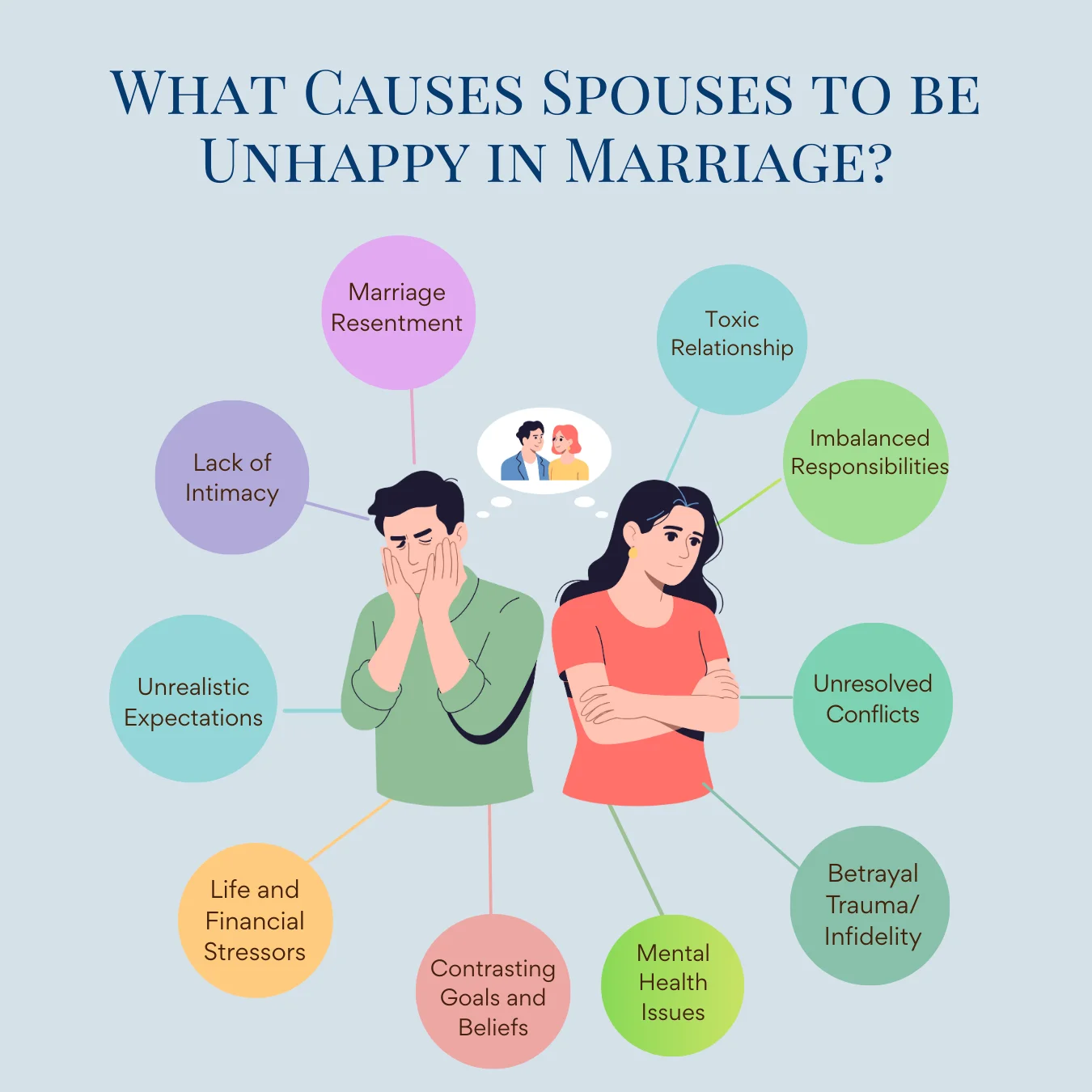
Understanding the possible reasons you feel unhappy in your marriage can give you a foundation to possibly rebuild joy and emotional connection. Here are some common causes of unhappiness in marriage:
1. Lack of Intimacy
Humans are social creatures, which means we need constant interactions for our overall well-being. A marriage without physical and even emotional intimacy can make you feel socially “malnourished.” Sometimes, this neglect isn’t personal, as stress from work, parenting, and other factors can become so overwhelming that this need is forgotten.
2. Unrealistic Expectations
Everyone has their "picture perfect" idea of what a marriage should look like. That picture may be formed from the media you consume, relationships you idolized, or a list of things you believe will bring you joy. Unfortunately, as those expectations go unmet, you may begin to feel out of place, and the pressure to change will slowly erode your happiness in your marriage.
3. Life and Financial Stressors
You both have conflicting approaches to spending money or financial secrets that lead to constant arguments. If these issues aren't addressed, they can make you feel like an unequal partner in your marriage, creating even more unhappiness.
4. Contrasting Goals and Beliefs
One goal of a marriage is to build a future together, but when both parties have separate aspirations for their career, number of children, and desired lifestyle, it can cause unwanted tension. Over time, you may begin to feel like you are growing apart rather than together.
5. Mental Health Issues
A person who has untreated stress, anxiety, depression, and sex or porn addiction will likely be unhappy in their marriage. When a partner lacks empathy or support for a spouse's mental health challenges, it can intensify unhappiness in the marriage. Learn more about SAST (sexual addiction screening test) instructions and SAST here.
6. Unresolved Conflicts
Every marriage experiences disagreement at some point. What's most Important is how quickly conflicts are resolved and whether they are fully addressed. Unaddressed conflict in a marriage leads to unresolved resentment, which can breed contempt, and ultimately spoil a couple's happiness
7. Imbalanced Responsibilities
Building together also means sharing responsibilities within the family. When the workload feels overwhelming or one-sided– whether it’s parenting duties or housework– it can leave you feeling underappreciated and resentful in the marriage.
8. Betrayal Trauma/ Infidelity
Painful experiences in previous relationships can lead to betrayal trauma and PTSD, triggering grief, anger, and increased suspicions in future relationships. These feelings can make it hard to enjoy your marriage as you may question your self-esteem or expect betrayal even from a loving husband. Learn more about 10 questions to ask a cheating spouse.
9. Marriage Resentment
Marriage resentment is the accumulation of hurts and disappointments that were never addressed, either before or during the early stages of marriage. Over time, these irritations eat away at your happiness, leaving you emotionally distant from your partner.
10. Toxic Relationship
Excessive criticism, emotional manipulation, or complete disrespect can make your relationship (marriage) toxic and unappealing. Emotional abuse from a partner who shows signs of narcissism and fails to respect your boundaries can leave you feeling unhappy and lonely.
Consequences of an Unhappy Marriage
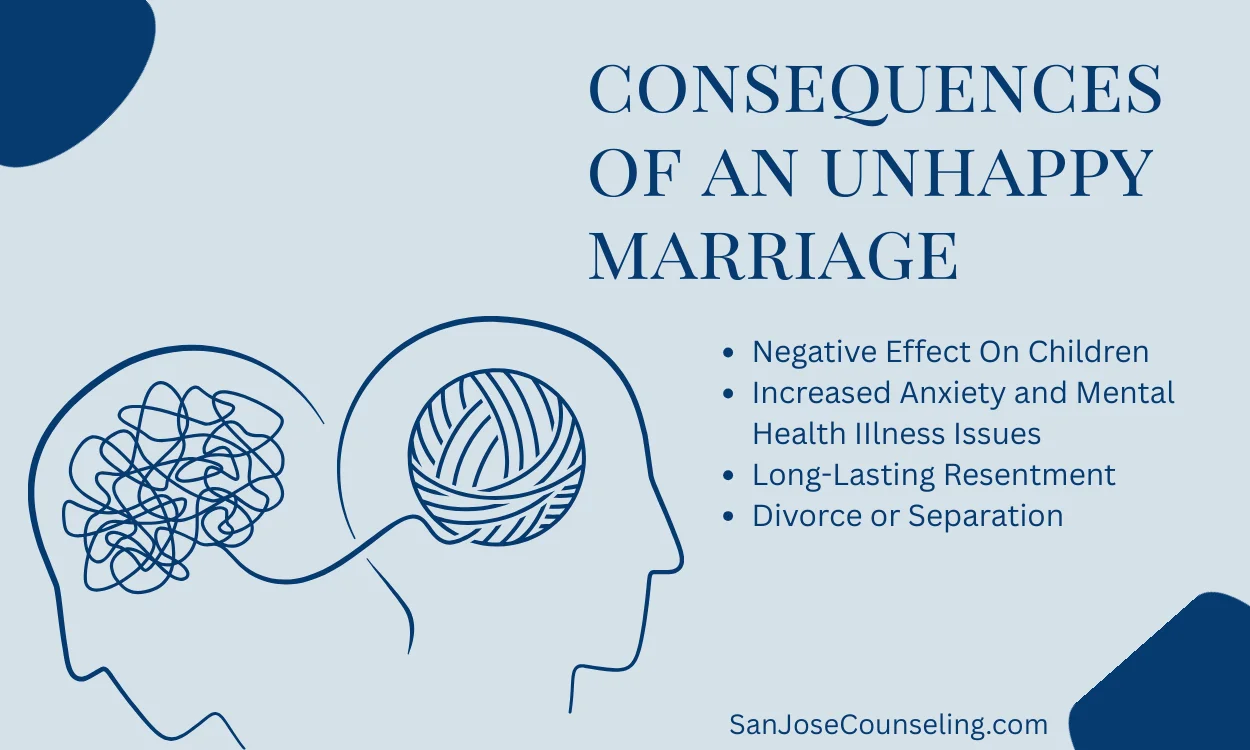
What happens when you stay in a toxic or unhappy marriage for a long time? In simple words, the stress, resentment, and disconnection can impact your mental or physical health, and even affect the kids as well.
Without professional intervention from an experienced marriage counselor, the final outcome may result in divorce. Here’s a deeper look at each potential consequence and the reasons you need marriage counseling:
1. Negative Effect on Children
Kids can be very perceptive and may internalize the conflicts between parents. These kids may have a higher risk of developing anxiety, poor behavior, and lower academic achievement as a result of their exposure to parental conflicts. More than likely, these kids will model the dynamic of their parent’s conflict in future relationships with others.
2. Increased Anxiety and Mental Health Issues
The constant emotional drain of living in an emotionally strained environment can lead people to develop serious mental health problems such as clinical anxiety, depression, and chronic stress. A child is unlikely to feel secure and supported at home without a stable family unit. Learn when to walk away from someone with mental illness.
3. Long-Lasting Resentment
Disappointment and hurt, when allowed to build up over time, can develop into strong feelings of resentment. This resentment will erode what little love or affection remains, and can make emotional reconnection very challenging. Ultimately, the intimate relationship may end long before the legal separation takes place (i.e., divorce).
4. Divorce or Separation
Eventually, without some type of intervention such as couples therapy, the accumulation of unhappiness can lead to divorce/separation. It is usually the final result of unresolved issues and the breaking of the marital bond.
Way Forward: Couples and Marriage Counseling (Gottman’sMethod of Repairing Marriage)
Research shows that the best ways to improve your marriage are couples therapy or marriage counseling. This approach follows a structured process guided by a licensed LMFT or CPTT therapist, Dr. Invia A. Betjoseph. At San Jose Counseling, we provide the tools and pathways to rebuild trust, rekindle your intimacy, and reconnect broken marriage bonds. Some strategies professional marriage counselor use to help you enjoy the benefits of marriage counseling include:
1. Gottman Method
The Gottman Method is an evidence-based couples therapy that helps couples build love maps, encourages admiration, strengthens connection by responding to each other’s bids, and breaks negative conflict cycles, while also helping couples handle disagreements and deepen their closeness.
2. Emotional Intelligence
Emotional Intelligence is a person’s ability to recognize, understand, and manage their own emotions, as well as the emotions of others, in order to enhance communication, improve empathy, and resolve conflicts. During Couples Therapy we help partners develop this type of emotional intelligence so they can turn heated or destructive arguments into opportunities to connect more deeply.
3. Love Maps
Marriage counseling helps you create a Love Map — a roadmap into your partner’s inner world. It lets you understand their hopes, fears, dreams, and stressors. Knowing each other’s love maps makes it easier to take actions that bring happiness and connection to all.
When You Love Your Spouse But Still Unhappy
What if your husband or wife treats you how you’re supposed to be treated, yet you still feel unhappy in the marriage? This feeling can be confusing, and when not addressed, it can lead to guilt.
One reason is what’s sometimes called "Grass is Greener Syndrome," where you imagine and even crave a better life and fail to keep an emotional connection with your current one. This often happens a few months into the marriage, once the initial excitement once.
In this situation, a few effective communication exercises and methods can help you build that deep connection that you crave:
- The 7-7-7 Rule: Plan a date every 7 days, have a weekend getaway every 7 weeks, and at least once every 7 months have a longer vacation. The goal is to keep your relationship a priority in your life.
- The 2-2-2 Rule: Every 2 weeks, do something fun together in the evenings; every 2 months, plan a short weekend getaway; and every two years, go on a week-long vacation.
- The 3-3-3 Rule: Spend 3 minutes with each other three times a day to just connect— whether it's hugging, saying hello, sharing a thought, or something similar. The goal is to build a deeper connection and develop intimacy.
Note that while these tools can help, they aren’t a substitute for professional insight. If the unhappiness persists, consider contacting an experienced marriage counselor.
Get the Love and Happiness Back in Your Marriage
Unhappiness is often a result of unresolved conflict, the erosion of intimate connection, or betrayal trauma. Fortunately, there is a solution. Couples counseling can be effective in helping you and your partner by using approaches like the Gottman Method and EFT.
Start with a free consultation call with Dr. Invia A. Betjoseph – an LMFT, CSAT and CPTT – to learn how to restore your happiness.

A licensed therapist and certified expert in sex addiction and partner trauma, offering compassionate counseling for individuals and couples. With advanced training in trauma therapy, including EMDR and Emotionally Focused Therapy (EFT), the focus is on providing effective, evidence-based treatment to heal emotional wounds, restore trust, and support lasting recovery.
FAQ's
Q1. Should I leave my spouse if I'm not happy?
Feeling unhappy in your marriage doesn’t always mean it’s time to leave. Sometimes unhappiness comes from issues that can be addressed, and many couples benefit from guidance with an experienced marriage counselor. Explore other possibilities before choosing a permanent decision like divorce.
Q2. What is the #1 thing that destroys marriages?
Contempt is often the biggest thing that can slowly destroy marriages. This can show up as sarcasm, name-calling, or eye rolling, signalling disgust for the other person and destroys the respect you have for each other— making repair even harder.
Q3. Which is the hardest year of marriage?
The early years of marriage—often the first 5 to 8 years—can be the most challenging, as couples adjust to major life changes.This may include having kids, managing career changes, finances, and more. Over time, many couples find a balance in their relationship and move along smoothly.
Q4. What is a silent divorce?
A silent divorce happens when a married couple emotionally disconnects while remaining legally married. They may live in the same house, but it can feel more like living with a roommate. The relationship lacks intimacy and romance, leaving both partners feeling lonely and disconnected