Tips to Boost Mental Health During Holidays

Tips to Boost Mental Health During Holidays
In California, the holiday season often feels bright and joyful. For many people, it looks cheerful on the surface. Yet many still struggle quietly. Holiday blues are common. Stress builds. Holiday anxiety affects a sizable number of people.
Your mental health can be severely strained by seasonal changes, high expectations, and even personal loss to the extent that you will hardly recognize the festivity in you. It is very important to understand that you can handle things on your own sometimes, but at other times, you will certainly need support.
An initial session with Dr. Invia A. Betjoseph, without any charge, will definitely help you in making your decision regarding the next step when it comes to seasonal depression, caregiving stress, perfectionism, or grief. Book a free consult today!
What Is Mental Health?
The World Health Organization defines mental health as a state of well-being. It means being able to cope with normal life stress. It includes working efficiently. It also involves making a positive contribution to the community.
If your mental health is under pressure, you will probably recognize symptoms such as tiredness, feeling of being on edge, anxiety, and withdrawal from social relations, which may even be your silent detractors of the holiday mood and relationships. Learn more about “can a therapist diagnose mental health.”
Types of Mental Health to Take Care of This Holiday Season
- General Wellbeing:
General wellbeing reflects your sense of balance. It includes daily energy levels. It involves physical comfort. It shows how steady you feel overall. - Emotional Wellbeing:
Emotional wellbeing is how you recognize your feelings. It affects how clearly you express them. It shapes how well you regulate emotions under stress. - Psychological Wellbeing:
Psychological wellbeing reflects mental stability. It shows how you cope with challenges. It includes adaptability. It supports a positive mindset over time. - Social Wellbeing:
Social wellbeing relates to connection. It includes healthy boundaries. It reflects the strength of your support system. It shapes how supported you feel. - Behavioral Wellbeing:
Behavioral wellbeing shows up in habits. It includes daily routines. It reflects coping behaviors. It becomes visible during stressful periods.
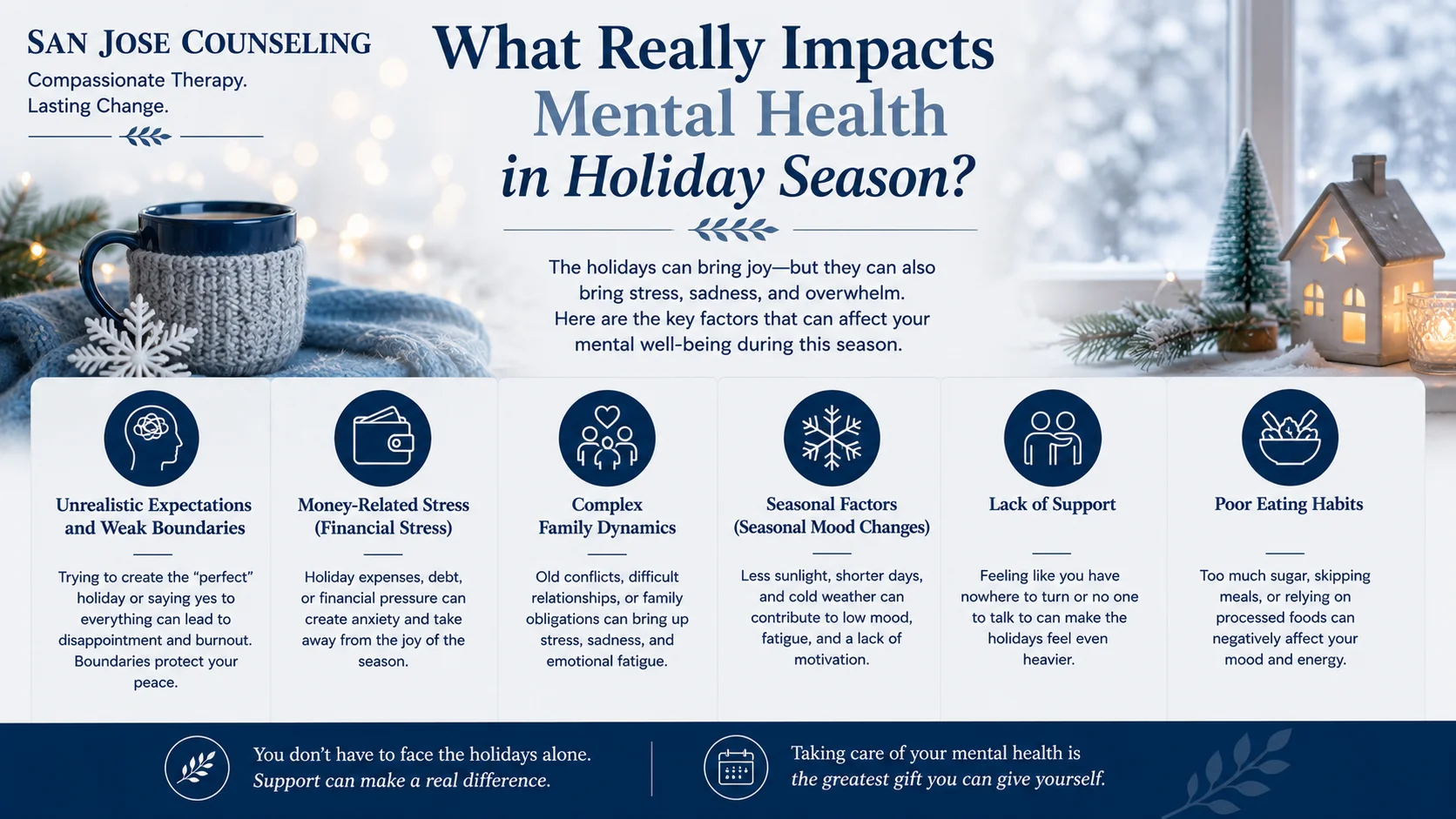
What Really Impacts Mental Health in Holiday Season?
The festive period is packed with activities. That makes it harder to track your mental health. You may focus on creating a perfect celebration. Anxiety, especially high functioning anxiety can go unnoticed. Fatigue builds quietly. Emotional disconnection often slips by.
The best option is to spot precisely what causes these feelings to better monitor your mental health this holiday.
1. Unrealistic Expectations and Weak Boundaries
You feel pressure to craft the perfect moments, attend to all events, and everyone’s needs. Your body and mind burn out. To prevent burnout, you must set realistic expectations, say no, and maturely allow yourself to simplify your plans without guilt.
2. Money-Related Stress (Financial Stress)
Holiday spending can add up fast. Travel costs increase pressure. Gift expectations stretch finances. Money worries raise anxiety levels. Sleep often suffers. A clear budget helps. Prioritize what truly matters. Choose meaningful but affordable alternatives. Emotional tension eases when spending feels controlled.
3. Complex Family Dynamics
Sometimes family reunions bring up past fights, upset traumas, or even that which emotionally triggers you. You might feel that you have to put up with these unpleasant situations. The best ways to keep your emotional peace is to set time limits, prepare your ways out, as well as, refrain from dealing with the sensitive topics.
4. Seasonal Factors (Seasonal Mood Changes)
Less sunlight because of the shorter days can affect your energy and motivation. This can make you involuntarily withdraw, feel sluggish, or mentally unavailable. The best option is to get as much done during the day or focus on physical activities to maintain emotional stability throughout.
5. Lack of Support
If you happen to be lonely, misunderstood, or feel like you don't have any support, then the stress of holidays will be very overwhelming for you. Such a situation is very common among caregivers, new parents, or people who are far from their families. Making a call to someone and also asking for professional help are two ways that can absolutely keep you from being alone.
6. Poor Eating Habits
Irregular meals, too much sugar, and alcohol consumption can spoil your mood and sleep. Proper nutrition is really a very important factor in emotional change and in keeping the mind clear.
Bonus: Why Prioritizing Mental Health During the Festive Season Matters
Taking care of your psychological well-being helps you handle the holiday season. It helps you relate to others. It allows you to enjoy the moments that matter. Putting well-being first reduces daily tension. It protects your emotional reserves. It lowers the risk of anxiety or depression carrying over after the holidays. It also helps you start the new year feeling stable. Not worn down. Not exhausted.
5 Tips to Power Up Your Mental Health and Wellness for Stress-Free Holidays
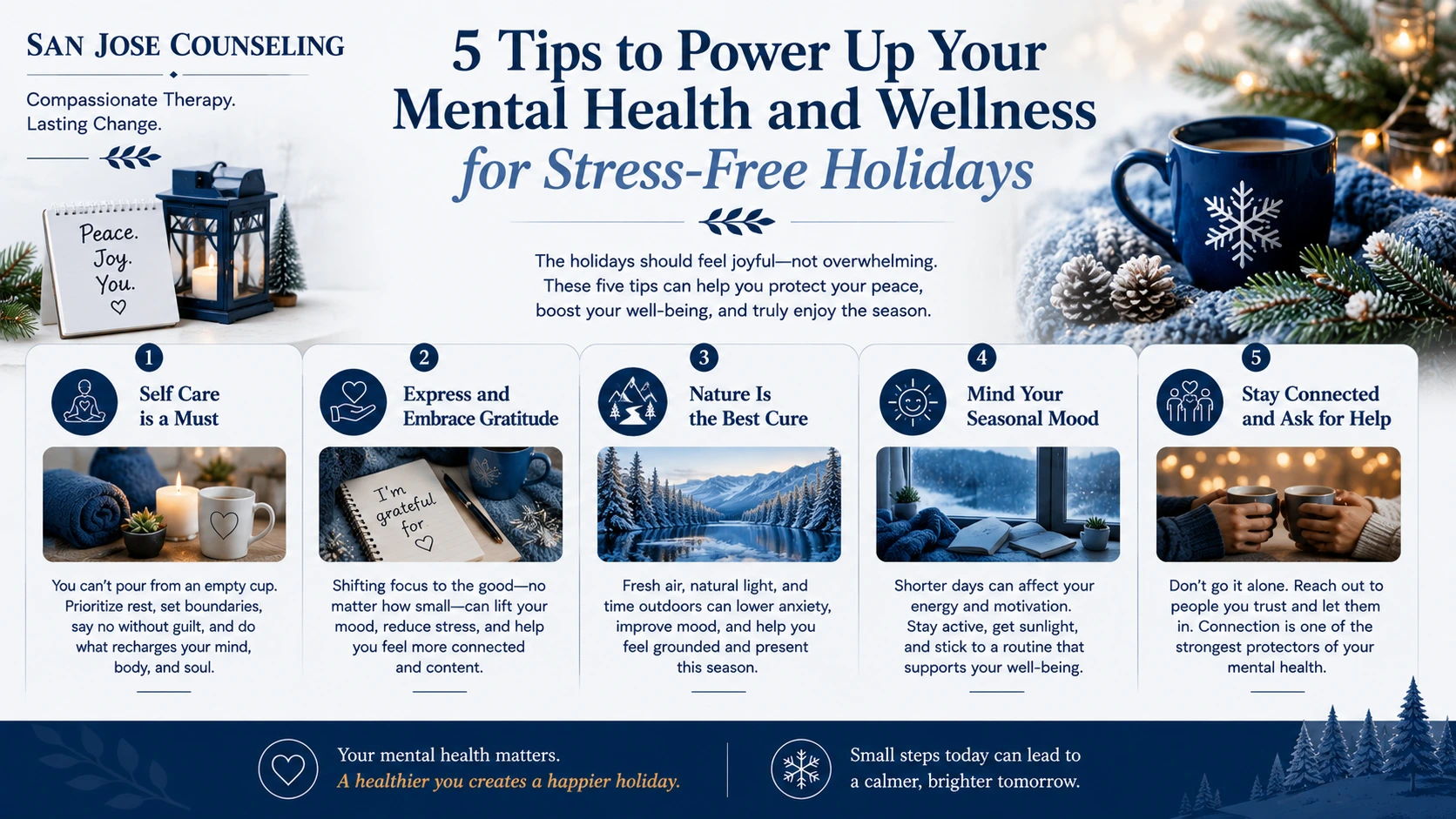
The holiday season will definitely stress you, but fortunately, there are five things you can do to power up whenever you feel overwhelmed.
1. Self Care is a Must
The first step to being able to tackle the holiday season is to first handle your overall health. How should you approach this?
- (a) Physical Activity
Moving around regularly is really good for you. It helps get rid of stress hormones. Makes you feel happier. You do not have to do hard workouts. Just walking or stretching or doing some exercise is enough. - (b) Quality Sleep
Sleep is essential for emotional control. It also supports stress tolerance. Going to bed at the same time helps. Waking up consistently matters too. These habits keep your mood stable. This is especially helpful during busy holidays. Sleep reduces anxiety. That matters when your responsibilities pile up. - (c) Eating Balanced Meals
Eating balanced meals is really important because it helps keep your blood sugar steady. This is good for your mood. It helps you focus. If you skip meals or eat much sugar, you might feel really irritable and tired. - (d) Limiting Alcohol and Tobacco
Alcohol and tobacco may feel relaxing short term but worsen anxiety and sleep. Reducing use protects emotional regulation and prevents holiday stress from intensifying.
2. Plan How, Where, and When to Spend (Strategic Budgeting)
Holiday spending strongly affects mental health. Money stress builds quickly. Planning ahead reduces those worries. It creates a sense of control. That control lasts throughout the holidays.
- (a) Set a Budget and Create a Master Sheet
It is important to allocate clear amounts of money for buying gifts, traveling, eating, and going to events. A simple master sheet is a tool that helps you keep track of your expenses and prevent bad spending. - (b) Limit Traveling
Traveling doesn’t only make the trip more expensive but also tires you emotionally. By cutting down on your unnecessary trips, you keep your energy, take less stress, and instead of that, you can engage in deep and meaningful relationships. - (c) Consider Budget-Friendly Alternatives
You don’t have to break the bank to make a memorable gift. Simply making a heartfelt meal or giving a homemade gift can be a less expensive way to show love during the holidays. - (d) Take Advantage of Early Sales
Buy the things you need very very early. It is a way of avoiding the financial last-minute stress and still being capable of staying within your budget without the feeling of being in a hurry. - (e) Keep Post-Holiday Expenses in Mind
Always remember that money will still be needed after the holidays have passed. Thinking ahead is not only a safeguard for your mental health against the money regrets and the ongoing anxiety but also an act of great self-care in a new year.
3. Express and Embrace Gratitude
Being grateful helps keep your emotions stable. It supports resilience. This matters most during stressful holidays. Gratitude shifts your focus. It does not erase challenges. It changes how you hold them. It strengthens your relationship with yourself. It also deepens your connection with others.
- (a) Verbal Gratitude
One of the ways to increase relationships and to lower the degree of the tension is the loud and clear expression of gratitude. Simple and truthful words make you feel more connected and emotionally stable during the holidays. - (b) Gratitude Through Actions
Displaying gratitude through supportive and caring actions not only makes trust and emotional safety stronger but also, it is a powerful way to communicate one's feelings. Quite often, this small action has a stronger emotional impact than words. - (c) Quality Time and Kindness
By spending purposeful time with each other, we not only increase our bond but also lessen the feeling of being lonely. The performance of good deeds increases the frequency of positive emotions and raises the general mental well being. - (d) Appreciation Meditation
This activity lets you become aware of positive things without ignoring the stressful ones. It assists in the regulation of emotions as well as your awareness emotionally heavy times. - (e) The Six Pillars of Gratitude
This model created by Dr. Kerry Howells is about deepening gratitude and becoming emotionally stronger through the four main elements: attention, reflection, expression, and action.
4. Nature Is the Best Cure
Spending time in nature supports mental clarity and emotional calm. Natural environments regulate stress more effectively. Mood improves. Focus returns, even during a demanding holiday season.
- (a) Forest Bathing
Intentional time in natural spaces lowers stress hormones. The body relaxes. The mind slows down. Even short visits to parks help. Green spaces support steady emotional regulation. - (b) Travel to Natural Settings
Quiet outdoor travel creates a true mental reset. Sensory input softens. Overstimulation fades. Nature based trips ease holiday pressure. Detachment becomes easier. - (c) Sensory Mindfulness
Engaging your senses outdoors anchors you in the present. You hear subtle sounds. You notice textures. Light shifts your attention. Racing thoughts slow. Anxiety settles. - (d) Choose Outdoor Over Indoor Exercise
Outdoor movement benefits the mind more deeply. Fresh air supports emotional balance. Natural light stabilizes mood. These effects exceed indoor workouts. - (e) Grow New Plants in Your Garden
Caring for plants increases daily contact with nature. Routine forms naturally. Growth becomes visible. This sense of responsibility supports emotional stability. Stress also eases over time. - (f) Laugh and Love Your Loved Ones
Positive connection protects mental health during the holidays. It creates emotional safety. It reduces loneliness. It also strengthens resilience when stress is high. - (g) Laughter and Emotional Relief
Laughter lowers stress hormones. Mood improves quickly. Emotional pressure eases. Research from HelpGuide shows laughter supports emotional well being. It also helps people cope with holiday stress. - (h) Stress Reduction Through Laughter
Studies connect laughter to physical relaxation. Muscles loosen. Circulation improves. Built up tension from ongoing stress decreases. - (i) Connect and Practice Vulnerability
Honest sharing deepens emotional bonds. It allows you to feel seen. Support feels real. Emotional weight becomes lighter when it is shared. - (j) Respect Independence
Healthy relationships need balance. Closeness matters. But personal space matters too. Respecting independence protects boundaries. In the end, connection stays supportive, not overwhelming.
Take Care of Your Mental Health During This Joyous Holiday Season
The holidays can be joyful. They can also be heavy. If you live with seasonal depression, the season may feel harder. Caregiving pressure adds weight. Perfectionism increases stress. Parenting alone can feel isolating.
Mental health deserves attention during this time. That’s because financial strain often makes symptoms worse. Unrealistic expectations can add pressure. Even delaying support can intensify emotional distress.
Seek professional help if you notice the following signs.
- Persistent anxiety
- Low mood
- Sleep changes
- Appetite shifts
- Emotional numbness
- Social withdrawal
- Stress that continues after the holidays
Early support matters. It protects your well being. It also supports long term emotional recovery. Book a free consult with Dr. Invia today!
Dr. Invia A. Betjoseph
A licensed therapist and certified expert in sex addiction and partner trauma, offering compassionate counseling for individuals and couples. With advanced training in trauma therapy, including EMDR and Emotionally Focused Therapy (EFT), the focus is on providing effective, evidence-based treatment to heal emotional wounds, restore trust, and support lasting recovery.
FAQs
Q1. How to manage mental health during the holidays?
The best way to manage your mental health during the holidays is to be realistic about your expectations. Perfection adds pressure. Let some things go. Prioritize eating well. Avoid unnecessary spending. Protect your sleep. Reach out for help when you need it. Support makes a real difference.
Q2. What are 5 ways to improve mental health?
Move your body regularly. Even light exercise helps. Get enough sleep most nights. Eat balanced meals. Maintain healthy relationships. Connection matters. Manage stress in healthy ways. Online Therapy helps. Meditation can help too.
Q3. What are the 5 C’s of mental health?
The 5 C’s of mental health include:
- Connection
- Coping
- Control
- Confidence
- Compassion.
All these result in proper emotional control, resilience, and good psychological wellbeing.
Q4. How do the holidays affect mental health?
The holidays affect your mental health in many ways. Financial pressure builds quickly. Social demands increase. Family drama can resurface. Grief may appear unexpectedly. Routines become unpredictable. All of this raises stress. Anxiety often spikes. Mental well-being can suffer as a result.
Q5. What are the 5 golden rules of mental health?
The five golden rules start with protecting your routines. Structure keeps you grounded. Manage stress early. Do not wait until it spirals. Maintain strong social support. Care for your body daily. Sleep and nutrition matter. Seek professional help when things feel too heavy.