Holiday Anxiety: Signs, Causes, and Management

Holiday Anxiety: Signs, Causes, and Management
Holiday anxiety can make it hard to enjoy the happiness people expect this season to bring. You are supposed to feel relaxed at family dinners. Gift exchanges should feel warm. Traveling together should feel exciting. Instead, tension often creeps in and refuses to leave.
You may notice constant worry running in the background. Small things feel irritating. Sometimes you just want to go home, even while the celebration is still happening.
That disconnect can feel confusing. Maybe even discouraging. Still, anxiety does not have to define the season. With compassionate guidance, Dr. Invia A. Betjoseph can help you reclaim calm. You can enjoy a truly stress-free holiday just as you want it. Schedule a free consultation call today!
What is Holiday Anxiety?
Holiday anxiety is a form of situational anxiety. It appears or intensifies around major holidays and seasonal events. According to the American Psychological Association, it is often linked to increased expectations. Disrupted routines also play a role. Financial pressure adds strain. Social demands increase the burden.
In many cases, holiday anxiety is described as hidden anxiety. It does not always look dramatic. It is not always obvious. You may appear functional on the outside. Inside, you may feel tense, overwhelmed, or emotionally drained.
You may still attend events, host gatherings, and even travel. However, anxiety quietly follows each moment. Over time, this unaddressed anxiety affects mental health. It also limits your ability to enjoy the season.
How is Holiday Anxiety Different from Holiday Stress?
While holiday stress and holiday anxiety are two separate concerns, they have the same cause and effect. These include having too much on your plate during the holidays due to a full calendar, high family expectations and financial issues.
Both holiday stress and holiday anxiety will resolve when the holiday season has come to an end; however, for many, the anxiety from the holiday experience will persist long after the holiday season has ended.
This residue makes you feel constantly worried and emotionally exhausted for some more weeks.
Signs of Holiday Anxiety
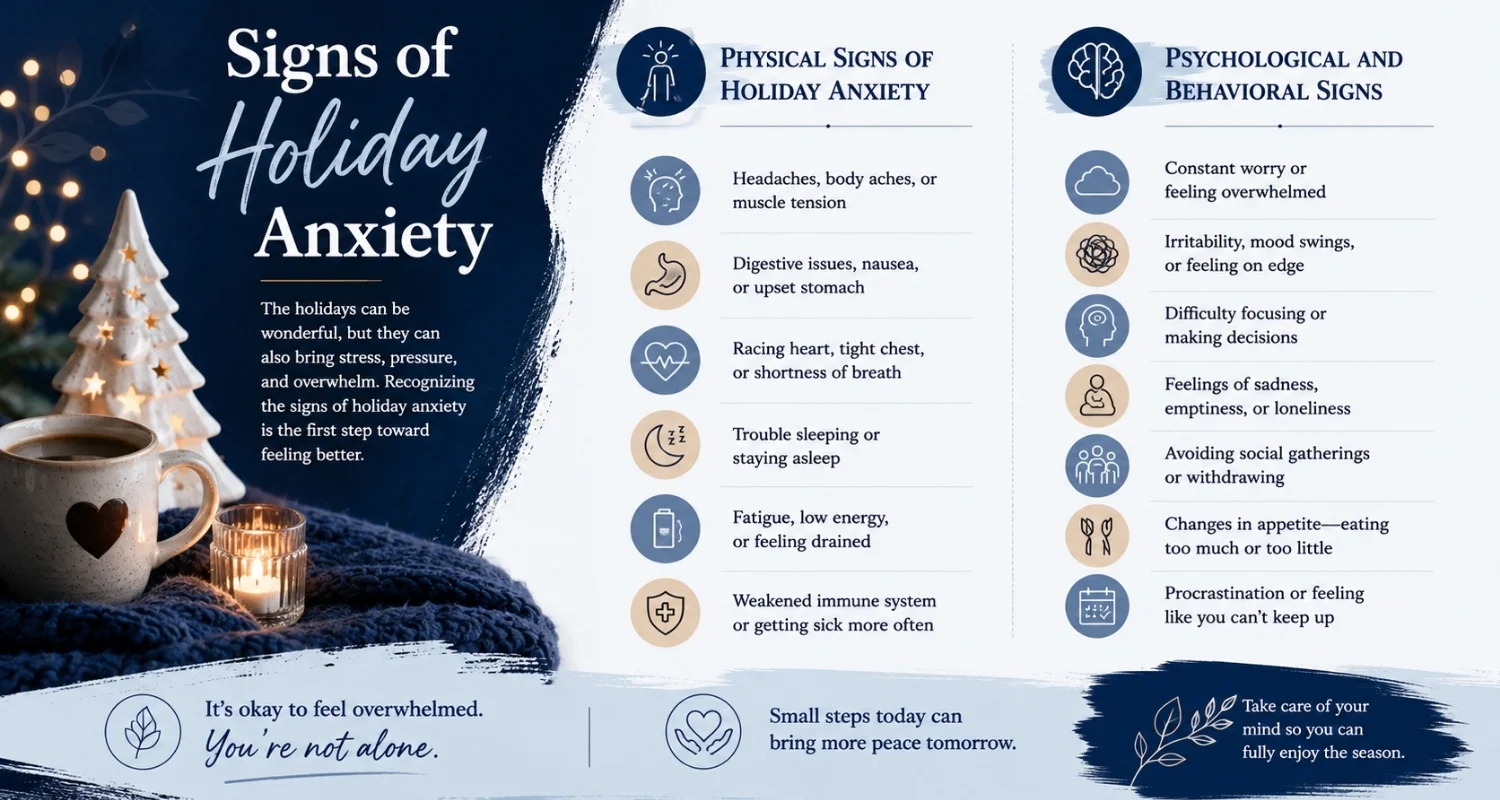
Recognizing holiday anxiety matters. You may hide stress behind smiles. You may hide it behind traditions. You may even hide it behind a busy schedule. But when warning signs are overlooked, anxiety grows stronger each year.
Research shows Christmas and year end holidays are highly stressful. Financial pressure contributes. Social demands add strain. While emotional expectations increase the burden.
Early awareness helps you take control. You can address anxiety before symptoms escalate. In return, you protect your holidays and your well being.
1. Physical Signs of Holiday Anxiety
- Shortness of breath
- Constant headaches
- Muscle tension
- Nausea
- Insomnia
- Constant tiredness
- Heart palpitations
- Poor appetite
- Restlessness
2. Psychological and Behavioral Signs
- Constant anxiety
- Irritability
- Feeling overwhelmed
- Avoiding gatherings
- Difficulty enjoying happy moments
- Overthinking
- Feeling emotionally disconnected
- Loss of excitement
Note: When holiday anxiety goes untreated, risks increase. Burnout becomes more likely. Depression can develop. Chronic anxiety patterns may form. Over time, the nervous system stays in survival mode.
Professional support can help. It allows your system to reset, protects mental health, and helps rebuild joy. Many clinicians agree on one point.
What Causes Holiday Season Anxiety?
Holiday season anxiety develops as multiple stressors rise at once. Schedules become crowded. Expenses increase. Social expectations intensify. Financial strain is present. Family conflict adds pressure. Routines become disrupted. Unresolved grief often resurfaces.
Holidays also create pressure to feel happy. They demand a perfect experience. When reality does not match expectations, anxiety increases. Loneliness may feel sharper. Past losses become more noticeable.
Without boundaries, stress compounds. Without coping strategies, anxiety grows. What should feel joyful can become overwhelming.
Holiday Anxiety: Do You Really Need Professional Help?
If your holiday anxiety is mild, simple things like setting clear boundaries and taking a break can help you cope. But for constant and overwhelming holiday anxiety, you will need to see a professional.
Warning signs include:
- Persistent worry
- Sleep problems
- Panic symptoms can develop
- Emotional numbness
- Avoiding holidays entirely.
This is when support becomes important. Working with a trained therapist helps you understand what drives your anxiety. Therapy gives you tools to manage it safely. It also helps you manage it effectively.
With expert care, you can reduce symptoms. You can regain emotional balance. You can also enjoy the season without constant tension.
1. Cognitive Behavioral Therapy (CBT)
CBT helps identify anxious holiday thoughts. It shows how these patterns form. It replaces them with healthier thinking. The result is that thoughts become more realistic. You also worry and panic less.
2. Acceptance and Commitment Therapy (ACT)
ACT teaches you to accept anxious thoughts. You learn not to fight them. You learn not to follow them. Over time, these thoughts lose control over your actions. ACT keeps you present. It helps you focus on what matters during the holidays.
3. Dialectical Behavior Therapy (DBT)
DBT supports emotional regulation. It builds stress tolerance. It helps manage intense emotions. It is useful when anxiety feels overwhelming during the holidays.
4. Individual and Group Therapy
Individual therapy, even online therapy, offers personalized support. Care is designed for your needs. Group therapy creates connection. You share space with others. You feel less alone in your experience.
5. Family Therapy
Family therapy addresses relationship stress. It improves communication patterns. It explores shared expectations. These dynamics often trigger holiday anxiety.
Don’t Let Anxiety Make Your Holidays Harder This Year!
Holiday anxiety and stress can affect you and your family. Children feel it too. Meaningful moments can turn into emotional strain. When you notice the signs early, you gain control. You can manage them with intention.
Start by simplifying plans. Set clear boundaries. Prioritize rest. For deeper support, schedule a free consultation with Dr. Invia A. Betjoseph. He is a CPTT and experienced California counselor. He can help you reclaim calm and enjoy a more joyful holiday season. Schedule a free consultation today.
Dr. Invia A. Betjoseph
A licensed therapist and certified expert in sex addiction and partner trauma, offering compassionate counseling for individuals and couples. With advanced training in trauma therapy, including EMDR and Emotionally Focused Therapy (EFT), the focus is on providing effective, evidence-based treatment to heal emotional wounds, restore trust, and support lasting recovery.
FAQs
Q1. What is the 3-3-3 rule of anxiety?
The 3-3-3 rule is a grounding technique. It calms anxious thoughts in the moment. You name three things you can see. You identify three sounds you can hear. You move three parts of your body. This pulls your attention away from worry. It brings your focus back to the present.
Q2. What is the 5-5-5 rule for anxiety?
The 5-5-5 rule is a breathing exercise meant to regulate your nervous system. It’s easy. Inhale for five seconds. Hold your breath for five seconds. Exhale for five seconds. Repeating this pattern helps reduce physical anxiety symptoms.
Q3. Why is my anxiety so high on holiday?
Holiday anxiety often rises due to multiple pressures. Financial concerns are common. Busy schedules add stress. Family dynamics can be difficult. Emotional expectations increase. When stressors overlap, anxiety becomes stronger.
Q4. Why is my anxiety worse at Christmas?
Christmas holds strong emotional meaning. Traditions bring added pressure. Expectations are often high. It can highlight family conflict. It can resurface grief. Loneliness may feel heavier. Comparison increases. Anxiety often feels more intense during this time.