ADHD-Focused Therapy for California Couples


What is ADHD and What does It Look Like in Couples?
ADHD, once known as ADD, is a neurodevelopmental condition that affects focus, impulse control, and organization.
A lot of people think it's just for kids, but that’s half true. The American Psychiatric Association says it sticks around into adulthood for many.
Then there's AuDHD: ADHD plus autism. Partners might notice shaky communication, tricky emotions, and a strong reliance on routines that feel like lifelines. It can make closeness tough in relationships.
What Does It Feel Like When One or Both Partners Have ADHD?
Think your partner has ADHD? The only way to know for sure is a full evaluation from a psychologist or psychiatrist.
Life with them is a rollercoaster. One second, they'll hit you with a spark of genius; motivation and ideas flying everywhere. Then comes a crash, with frustration, total overload, and exhaustion.
They may also be more emotionally sensitive, where criticism may feel more painful than for an average adult, which can cause them to feel shame, withdraw and become defensive.
Sometimes the partner without ADHD can end up feeling like they’re doing all the managing, almost like a parent, while the partner with ADHD can feel talked down to or controlled. If left unaddressed with couples therapy, the relationship may eventually fail.
Common Challenges of ADHD Couples
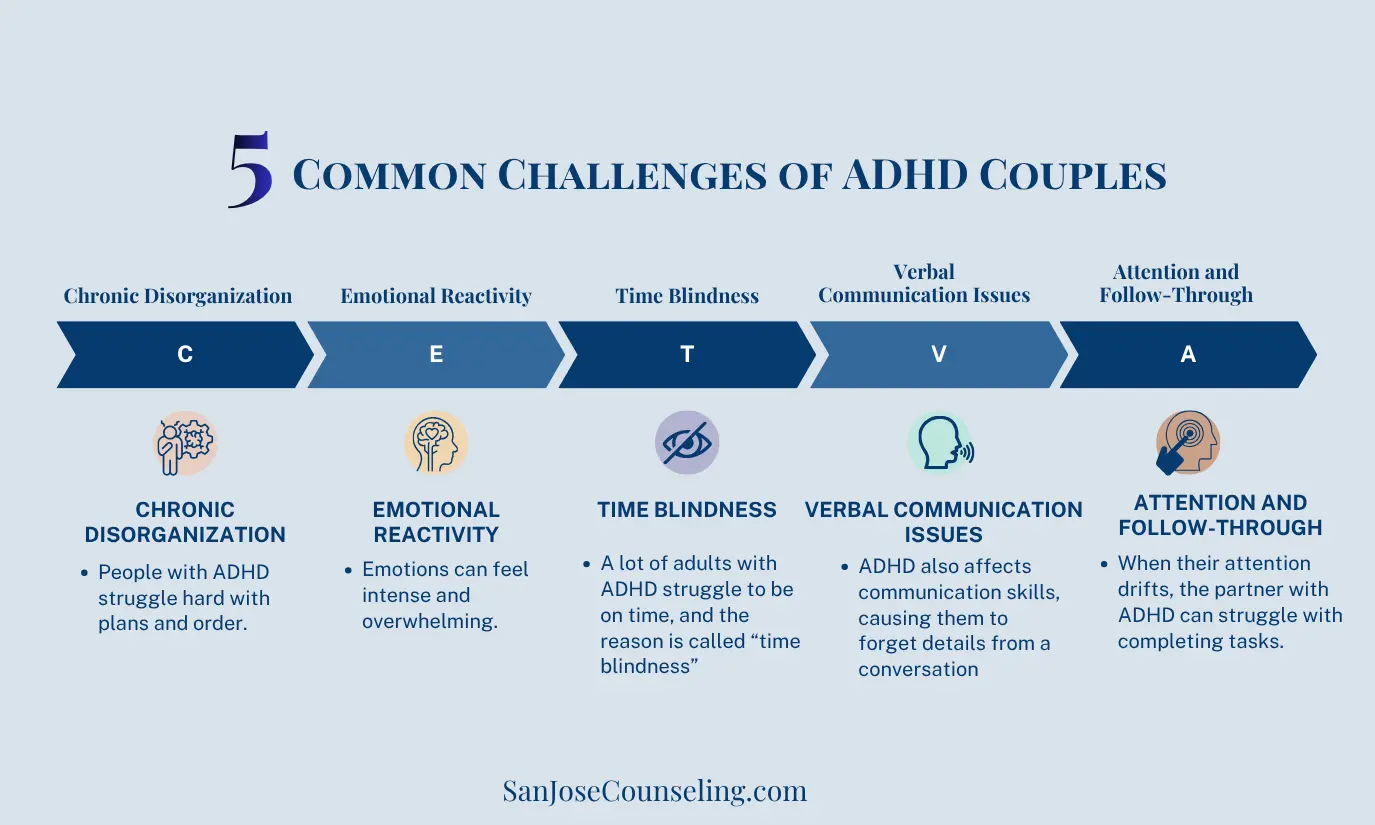
ADHD in relationships can stir up some real frustration, often leaving one partner feeling like they're carrying more than their share. Here are the top five challenges couples face.
1. Chronic Disorganization
People with ADHD struggle hard with plans and order. This means forgotten schedules, messy finances, and tasks left half-done. The other partner ends up picking up the slack, which wears them down fast. Meanwhile, the partner with ADHD might bounce jobs or land unemployed that can feel really tough
2. Emotional Reactivity
Emotions can feel intense and overwhelming. Tiny fights turn personal in a heartbeat, and they really sting. Simple chats become tough. Even simple check-ins can feel difficult. Both end up feeling lost and alone.
3. Time Blindness
A lot of adults with ADHD struggle to be on time, and the reason is called “time blindness”. This is because their brain struggles with estimating how long a task will take, leading to tardiness. Time blindness makes it tricky to get ready for dates, and the way some couples fix this is by setting a buffer time to reduce tension.
4. Verbal Communication Issues
ADHD also affects communication skills, causing them to forget details from a conversation or react without thinking, which can make the other partner feel ignored or less valuable. Combine this communication issue with emotional reactivity, and the result is an emotional outburst or avoidant responses during normal couple conflict.
5. Attention and Follow-Through
When their attention drifts, the partner with ADHD can struggle with completing tasks. The hyperactivity can also cause them to hyperfocus on unrelated, emotionally rewarding tasks instead. This leads them to frequently forget about making important plans, and hyperfixating on certain hobbies.
Strategies and Tools for Managing ADHD in Romantic Relationships
The best strategy for managing ADHD is to work with a licensed professional like Dr. Invia. However, there are some tools and communication strategies for couples you can implement to restore harmony to your relationship.
These include:
- Scheduling intentional time together where you can talk and connect without distractions; that also means no cellphones.
- Slowing down daily routines to have extra time for finishing tasks. This should reduce tension, stress, and most importantly, lateness.
- Accepting your partner’s imperfections and focusing on solutions. Being fixated on their mistakes will only increase resentment that you need to overcome.
- Looking for your partner’s strengths, such as the creativity and quick thinking associated with ADHD. Doing this can bring a whole world of positivity.
- Choosing conflict wisely by deciding whether a potentially heated conversation is worth trading for peace.
- Working together to fix problems and share strategies, instead of playing the blame game on each other.
Ultimately, be compassionate and solution-oriented. Your partner didn’t choose to be born with a neurodevelopmental disorder. They are likely more frustrated at their condition, which makes blame and impatience the least helpful responses towards peace.
Why Choose San Jose Counseling.com for ADHD?
Can an individual with Attention-Deficit/Hyperactivity Disorder (ADHD) lead a regular life? The answer is yes;they can when using proper support and appropriate strategies.
At San Jose Counseling, you will be working with experienced therapists who are also licensed Marriage and Family Therapists (LMFTs) and trained trauma professionals, all of whom have experience in working with ADHD relationships.
Our counseling approach is to help neurodivergent and neurotypical partners develop an understanding of how their partner thinks, feels, and reacts. We do this by identifying ADHD patterns, emotional triggers, and relationship dynamics during the first several sessions.
In addition to developing greater insight into your partner’s behavior, you will also receive practical tools and techniques to effectively manage your ADHD symptoms, communicate better, and create a new healthy connection with your partner.
Conclusion
Couples in relationships dealing with ADHD may show up late to "date nights,” have trouble communicating with each other, or look a little scattered.
While ADHD is a condition that will continue to present challenges, it does not have to mean that you cannot have a happy relationship.
All you need are the right tools, empathy toward each other, and seeking out a professional who understands ADHD like Dr. Invia A. Betjoseph for support.
Dr. Invia is someone people with ADHD can trust when they’re looking to strengthen communication in their relationship, repair the damage to their trust, and reignite the flames of their relationship. Book a free consultation call today!
Dr. Invia A. Betjoseph
A licensed therapist and certified expert in sex addiction and partner trauma, offering compassionate counseling for individuals and couples. With advanced training in trauma therapy, including EMDR and Emotionally Focused Therapy (EFT), the focus is on providing effective, evidence-based treatment to heal emotional wounds, restore trust, and support lasting recovery.
FAQ's-ADHD Focused Therapy
Q1. What is the 1/3/5 rule for ADHD?
The 1/3/5 rule helps neurodivergent people stay focused on tasks. Each day, the person with ADHD focuses on 1 large task, 3 medium tasks, then 5 small tasks. The goal is to create a routine and prevent getting overwhelmed.
Q2. How to treat ADHD in adults?
While there is no permanent cure for ADHD, you can live a normal life with a combination of strategies. These include: Adult Attention-Deficit/Hyperactivity Disorder is usually treated with a combination of behavioral therapy, ADHD coaching or counseling, medication (when prescribed), and routines to stay organized.
Q3. What is the 20 minute rule for ADHD?
The 20-minute rule for ADHD advises ADHDers to stick to a task for 20 minutes then take a short break. This prevents the brain from feeling overwhelmed while gradually completing a task.
Q4. What is the 24 hour rule for ADHD?
The 24-hour rule recommends ADHDers wait a full day before reacting to emotional situations or making a major decision. With 24 hours, you should have enough time to logically understand the decision or your emotions and prevent impulsive action.
Q5. What is the 24 hour rule for ADHD?
The 30-minute rule recommends setting a timer for 30 minutes where the person with ADHD will focus on a task throughout that time. Afterwards, they can take a break. The goal is to lessen mental fatigue while getting things done.