Why Do I Hate Myself?

What is Self-Hating or Self-Loathing? And How it Affects Your Life?
Self-hate (or self-loathing) is when you have an ongoing pattern of negative thoughts toward yourself that usually reflect how little you think of yourself and how much shame you carry.
The DSM-5 does not classify self-hate as a mental illness. It is not a standalone diagnosis. However, it often appears as a symptom. It is commonly associated with conditions such as major depressive disorder.
Research shows a strong connection: people who say 'I hate myself' report significantly higher rates of suicidal ideation. These thought patterns can become persistent. They often feel overwhelming, and are painful--and over time, they erode self-esteem.
The effects of self-hatred include:
- Chronic depression and anxiety.
- Lack of motivation for anything, including reaching goals.
- Feeling lonely.
- Damage to your ability to form close, healthy relationships with other people.
- Spreading your own feelings of hopelessness to others around you.
- Contributing to poor overall health.
Why Do I Hate Myself? Discovering the Causes and Roots of Self-Hating
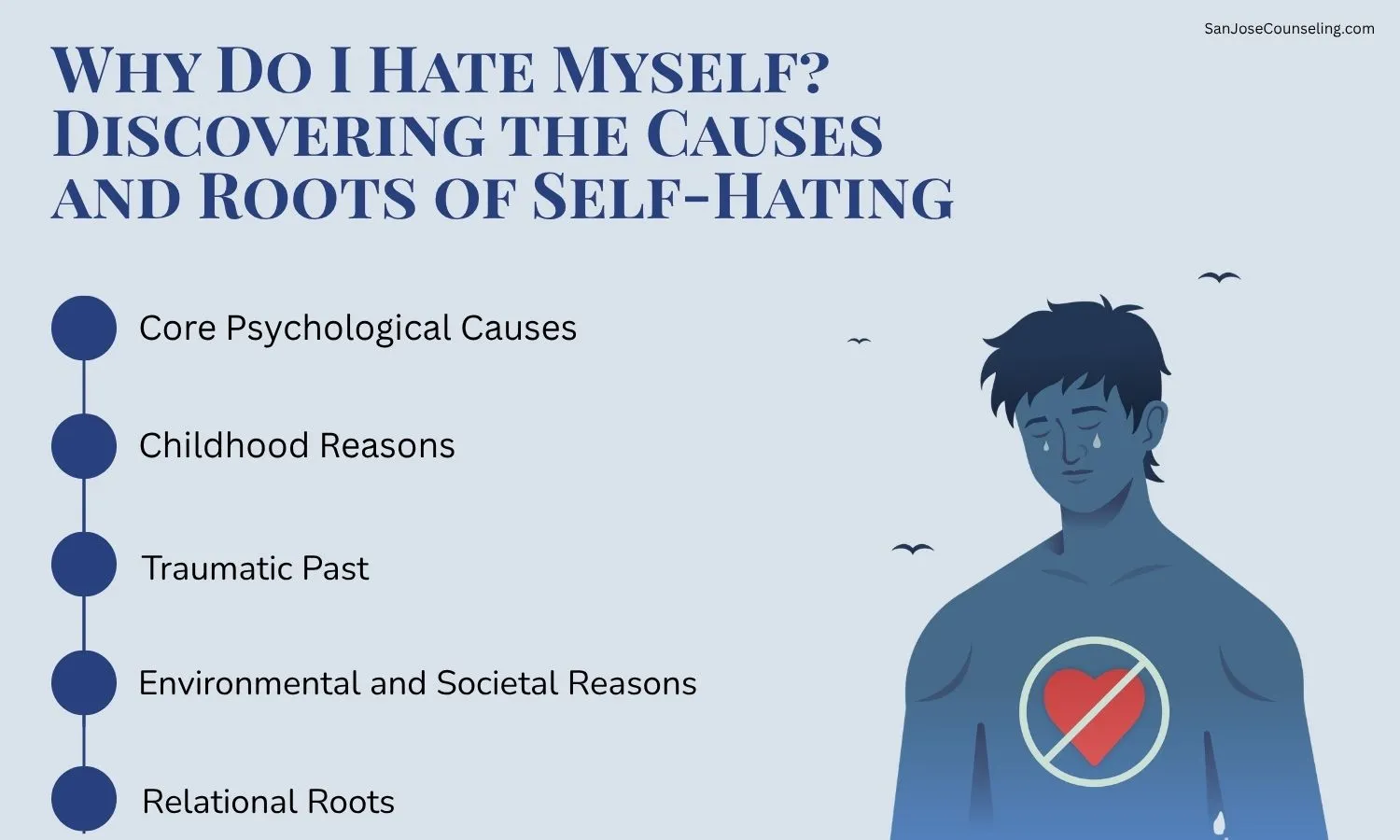
Why do I hate myself? This is a question many people ask themselves daily. Self-hate tends to become more prominent when people are stressed, making mistakes, or experience emotional distress.
Core Psychological Causes
Negative thinking patterns like cognitive distortions such as black or white thinking, overgeneralization, and self-criticism create a prism through which you view yourself. Cognitive Behavioral Therapy studies show that these thinking patterns create, and sustain, faulty beliefs about yourself.
The identity associated with low self esteem and shame also contributes where one experiences themselves as fundamentally flawed, rather than as a person who makes mistakes like everyone else.
Childhood Reasons
Children that are subjected to excessive criticism, neglect and inconsistent parental interventions may internalize the idea that they are not “good enough.” Research suggests that self-doubt and self-rejection are common outcomes of insecure attachment to parental figures.
Even the most subtle patterns in parental interventions like conditional praise can create an association between self-worth and performance, which will lead to increased self hatred in the future.
Traumatic Past
Why do I hate myself the most? This experience is especially common among people who have experienced trauma. Abuse, being bullied and losing important people in one's life are some of the experiences that create trauma.
Trauma researchers show that the victims of trauma tend to internalize blame even when it is not warranted. Pathological self blame, chronic shame, and negative thoughts including a self hate component are some of the outcomes of trauma.
Environmental and Societal Reasons
The modern world is full of factors that could lead to intense feelings of self-hate. Constant comparisons via social media, the culture's idea of what we should look like, etc., create unreasonable expectations for ourselves.
Research has found that excessive comparison is linked with low self-esteem and increased symptoms of depression. When we compare ourselves to unrealistic images and/ or measures of success on an ongoing basis, it is much easier to feel less than adequate and think negatively about ourselves.
Relational Roots
Your relational environment determines why you hate yourself but love others. If you habitually put other people first and lastly consider your own desires and needs, then you tend to develop a relationship of sacrifice and internal criticism.
An abusive or invalidating relationship also reinforces your feeling of being unlovable. Therefore, over time, you may be very understanding and empathetic towards everyone around you; however, extremely hard on yourself.
How to Deal with Self-Hatred When It Hurts?
If instances of self-hatred are sustained and frequent, there are techniques and strategies to replace them. They target patterns that fuel these feelings, helping you even
1. Practice Self-Compassion
Self-compassion is a way to help lower feelings of shame and self-hatred, because those two things drive how and why you feel this way. Self-compassion has also been shown in research to increase an individual's ability to regulate their emotions and be resilient.
- Supportive touch: Put your hand on your heart to relax your nervous system.
- Monitor what you say to yourself: Instead of always being overly critical towards yourself; try being neutral and realistic.
- Journaling: Write about yourself but do it from a place of compassion rather than anger.
2. Reduce Exposure to Triggers
Exposure to fewer triggers can help disrupt the cycle of self-hate and constant comparisons. This reduces the amount of emotional overwhelm you feel as well as prevents reinforcing negative beliefs.
- Audit Social Media: Identify (and if possible) limit content that promotes feelings of inadequacy
- Set Boundaries With People: Limit exposure to those who are consistently critical or dismissive
- Manage Internal Triggers: Recognize and manage patterns such as excessive thinking/perfectionistic behaviors
- Use Opposite Action: Act in opposition to self-isolation or avoidance
3. Forgive Yourself
Self- forgiveness breaks down the connection between one's mistakes and their identity. Therefore, it allows for the transition from punishing oneself to learning/growth.
- Write yourself a Self-Apology Letter: Acknowledge the "harm" caused by an action but avoid attacking your identity.
- Outline how you plan to move forward: Define what you will do differently next time.
- Defining mistakes & letting go: Define the specific behaviors/choices that were made and release them from defining your worth.
4. Learn to Combat Shame Spirals
Why do I hate myself so much? Shame spirals are continuous negative thought loops and continue to keep you stuck in negativity. Intercepting them can help you take back control of your negative thoughts.
- The 5-4-3-2-1 Technique: Identify 5 things you can see, 4 things you can touch, 3 things you can hear, 2 things you can smell, and one thing you can taste.
- Distraction (healthy): Find activities that will draw your attention away from the shame spiral.
- Silence, break it (mindfully): Speak with someone about your feelings or name out loud what you're feeling.
5. Make Physical Activity a Part of Life
Exercise has been shown to improve mood and reduce some of the physical symptoms associated with self-hate. Both your mental and physical health benefit.
- Micro-movements: Small, consistent movements to get you started on building momentum.
- Buddy System: Having someone accountable will help increase follow-through.
- Gym Close To Your Home: The closer the gym is to where you live, the less resistant you'll be to going.
Seek Self-Hatred Therapy
When self-loathing is a consistent theme in your life, it can be helpful to get guidance from an experienced therapist who has training in treating this condition.
A trained therapist will offer you many tools supported by research that have been shown to help people become aware of their negative self-talk and find ways to change those negative thoughts into positive ones. These tools include:
- CBT (Cognitive Behavioral Therapy): will help you learn how to identify distorted thoughts that cause self-loathing. It is most effective when a pattern of negative thinking is the primary issue.
- DBT (Dialectical Behavior Therapy): teaches you emotional regulation and distress tolerance. This will be most useful to you if your self-hatred has extreme intensity and/or is associated with strong emotional impulses.
- CFT (Compassion-Focused Therapy): specifically targets feelings of shame and self criticism. Most useful to you when you have an extremely critical view of yourself.
- Trauma-Focused Therapy: addresses prior traumatic experiences which may contribute to self-hate. Most useful to you when your self hatred can be traced back to an experience you did not resolve.
You'll work with a therapist as they support you in developing long-lasting, research-backed changes.
Self-Hatred and Emergency
Hate-filled thinking is a strong indicator of suicide ideations and self-harming behaviors. The longer self-loathing goes unaddressed, the more rapidly hopelessness can escalate, particularly without a supportive system in place.
If you live in California, there are resources available to you as soon as possible. Call or Text 988 Suicide and Crisis Lifeline for immediate assistance. Additionally, find your local crisis center.
If someone is about to harm themselves:
- Act Immediately:
- Do not leave them unattended
- Take away anything that could be used as a weapon
- Listen and talk in calm tones and non-judgmentally
- Call emergency services or a crisis hotline
Immediate action may prevent harm and save lives.
Dr. Invia A. Betjoseph
A licensed therapist and certified expert in sex addiction and partner trauma, offering compassionate counseling for individuals and couples. With advanced training in trauma therapy, including EMDR and Emotionally Focused Therapy (EFT), the focus is on providing effective, evidence-based treatment to heal emotional wounds, restore trust, and support lasting recovery.
Live the Life You Deserve
Self-hate is a deep pattern of behavior that may stem from low self-esteem or other disorders such as depression. Often this results in increased feelings of anxiety and suicidal ideation.
Self-hate often also stems from past traumas, social expectations and interpersonal issues (wounds) causing self-loathing to be a significant emotional burden. You can reduce self-hate by practicing self-compassion, setting healthy boundaries for yourself, forgiving others & yourself, and stopping shame cycles.
Our licensed therapists are available throughout California. Book your free consultation call with one of our experienced therapists today.