When to Walk Away from Someone with Mental Illness
More than 900 million people (nearly 1 in every 8 people) in 2019 were living with a mental disorder such as anxiety and depression, which are the most common, according to the World Health Organization (WHO). By 2023, this number has increased to approximately 970 million, including disorders like PTSD, schizophrenia, eating disorders, and neurodevelopmental disorders.
If your spouse, partner, friend, or loved one has a mental illness, it will inevitably impact your relationship. Healthy relationships rely on communication, trust, stability, and empathy—qualities that can be challenging to maintain when dealing with mental illness.
Walking away from a beloved family member during their time of need can have consequences. However, it is crucial not to risk your own mental and physical well-being due to their condition. It’s important to explore relevant options and consider a well-rounded approach before deciding to leave your loved one on their own.
Schedule your free consultation with Dr. Invia A. Betjoseph, who has helped adults and couples live healthy lives by treating mental health conditions.
Dr. Betjoseph is a Licensed Marriage and Family Therapist and Certified Sex Addiction Therapist trained in EMDR, specializing in sex addictions, couples therapy, and trauma.
This article discusses common signs of mental illness, six signs to consider before walking away from your loved one, and solutions to help your partner recover from mental illness.
Top 50 Signs Your Loved One Has Mental Illness
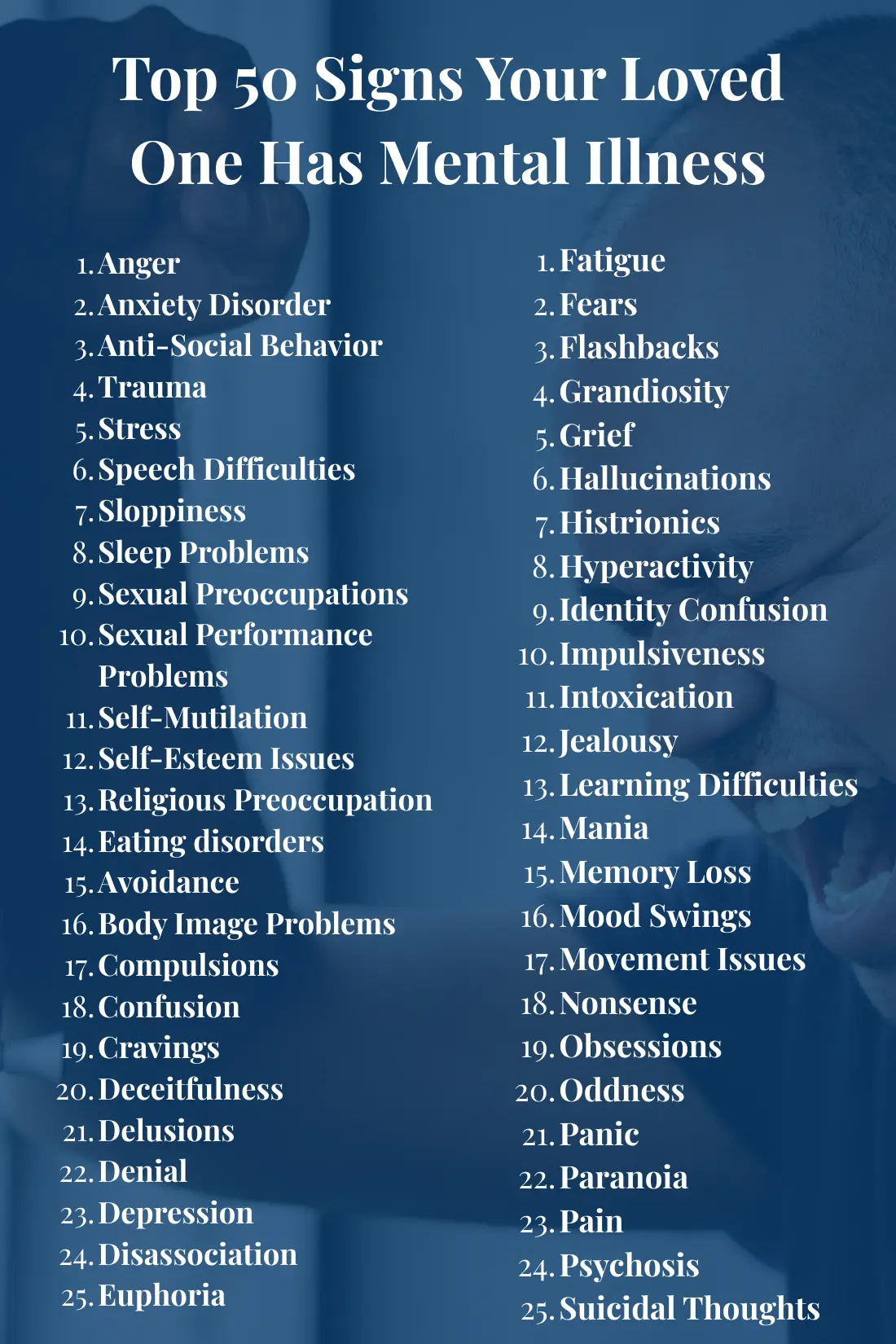
Mental illness can impact a person's behavior and daily life, as well as affect the caregiver. The signs of mental illness can vary depending on the condition and require a proper diagnosis from a reputable mental health professional.
The following are the signs of mental illness mentioned in the book “50 Signs of Mental Illness” by James Whitney Hicks:
- Anger
- Anxiety Disorder
- Anti-Social Behavior
- Trauma
- Stress
- Speech Difficulties
- Sloppiness
- Sleep Problems
- Sexual Preoccupations
- Sexual Performance Problems
- Self-Mutilation
- Self-Esteem Issues
- Religious Preoccupation
- Eating disorders
- Avoidance
- Body Image Problems
- Compulsions
- Confusion
- Cravings
- Deceitfulness
- Delusions
- Denial
- Depression
- Disassociation
- Euphoria
- Fatigue
- Fears
- Flashbacks
- Grandiosity
- Grief
- Hallucinations
- Histrionics
- Hyperactivity
- Identity Confusion
- Impulsiveness
- Intoxication
- Jealousy
- Learning Difficulties
- Mania
- Memory Loss
- Mood Swings
- Movement Issues
- Nonsense
- Obsessions
- Oddness
- Panic
- Paranoia
- Pain
- Psychosis
- Suicidal Thoughts
Note: A thorough diagnosis by a therapist is essential before identifying a mental health condition in an individual.
When should you walk away from someone with mental illness?
The following are 6 signs indicating the need to reassess your relationship with your mentally ill spouse or relative.
Physically Abusive Relationship
If the mentally ill person poses a threat to your safety, you should consider cutting ties with them, as a relationship with a history of abuse can jeopardize your well-being.
Physical abuse should never be present in a healthy relationship with your spouse or siblings. It is vital to set boundaries and seek help from a seasoned clinician to deal with any underlying mental health issues if violence is taking place.
The following negative behaviors are potential reasons to seek safety or leave the relationship:
- Breaking your possessions
- Physical Beatings
- Biting and scratching
- Harming children
- Throwing things at you
- Locking you in the room
- Abandoning you at different locations
Emotional and Mental Abuse
Emotional abuse can have profound and lasting effects on your mental, emotional, and psychological well-being.
It's crucial to prioritize your emotional health and seriously consider whether remaining in an abusive situation is in your best interest.
Choosing to protect yourself from emotional abuse is not selfish; it's an act of self-preservation and self-respect. Your emotional well-being should be your top priority.
The long-term consequences of emotional abuse can be severe, often leading to diminished self-esteem, a fractured sense of identity, and increased risk of depression and anxiety.
Ask yourself: Can you truly thrive in a relationship with someone who consistently disrespects you?
It's important to recognize that you deserve better than to live with a person who invades your personal boundaries and resents your successes. Remember, a healthy relationship should support your growth, not stifle it.
Emotional and mental abuse can involve any of the following things:
- Insulting you all the time
- Taunting you regarding your insecurities
- Using blaming and abusive language
- Criticizing you and being vindictive over trivial matters
- Placing unreasonable expectations on you
- Manipulating and coercing you
- Gaslighting and stonewalling

A licensed therapist and certified expert in sex addiction and partner trauma, offering compassionate counseling for individuals and couples. With advanced training in trauma therapy, including EMDR and Emotionally Focused Therapy (EFT), the focus is on providing effective, evidence-based treatment to heal emotional wounds, restore trust, and support lasting recovery.
Does Your Loved One's Lack of Empathy Leave You Feeling Alone?
Yes, a lack of empathy can leave you feeling isolated, unsupported, and emotionally disconnected from your loved one. Healthy relationships thrive on mutual empathy, which serves as the cornerstone of emotional support between you and your loved one.
Conversely, a lack of empathy can lead to feelings of isolation and emptiness. In such situations, it's crucial to reassess the relationship, considering whether to continue together or seek solutions through individual or family therapy.
Schedule your free consultation with Dr. Invia and find ways to repair your relationship and the mental health of your loved one.
What Should You Do When Someone Refuses Mental Health Treatment?
If your loved one refuses treatment for their mental health condition, you cannot force them to change unless they are willing to seek help themselves. If your spouse resists your efforts to address their mental disorder through therapy or counseling, it may be necessary to consider walking away for a period of time to protect your own well-being.
Conversely, a lack of empathy can lead to feelings of isolation and emptiness. In such situations, it's crucial to reassess the relationship, considering whether to continue together or seek solutions through individual or family therapy.
Schedule your free consultation with Dr. Invia and find ways to repair your relationship and the mental health of your loved one.
Is This Relationship Holding You Back From Living Your Life?
Yes, a relationship can become unhealthy if it consistently prevents you from pursuing your personal goals, career growth, or emotional well-being. Are you experiencing a sense of stagnation in your personal or professional life due to the time and energy devoted to caring for a mentally ill loved one?
This situation may be hindering your goals and career progress. It's important not to compromise your own well-being indefinitely.
Consider two paths forward: actively addressing their mental health issues or finding a way to distance yourself from the situation. Remember, a healthy relationship should be built on mutual support and benefit both parties involved.
Could Narcissistic Traits Be Damaging Your Relationship?
Yes, narcissistic traits or Narcissistic Personality Disorder (NPD) can significantly affect relationship health and emotional well-being. If you suspect your spouse has narcissistic personality disorder (NPD) or exhibits strong narcissistic traits, there are several steps you can take to protect yourself and manage the relationship more effectively. If you suspect your spouse has narcissistic personality disorder (NPD) or exhibits strong narcissistic traits, there are several steps you can take to protect yourself and manage the situation.
The following are the common 9 signs you may see in your narcissistic husband or wife.
1. Sense of Entitlement
2. Manipulative Behavior
3. Need for Admiration
4. Lack of Empathy
5. Arrogance
6. Grandiosity
7. Interpersonal Exploitativeness
8. Preoccupation with Success
9. Envy
Can You Support Your Loved One Without Sacrificing Yourself?
Yes, it is possible to support a loved one with mental health challenges without neglecting your own needs, but healthy boundaries are essential. It is very difficult to balance caring for a loved one with mental health issues and exercising self-care. However, there are successful ways to uphold both your relationship and your well-being without undermining either of them.
Below are some ways to help repair boundaries, improve your relationship, and address mental health concerns:
- Professional Support
- Online Therapy
- Couples or Individual Counseling
- EMDR or other trauma therapy
- Support Networks
- Friends, Family, and Caregivers